Best Bet
 Chests of Cai Shen
 Spaceman
 Blackjack VIP
 Blackjack Live
 Super Mine Bros
 Cash It
 4 Pots Riches
 Big Bass Splash
 Sugar Rush 1000
 5 Koi
5 Koi Great Rhino Deluxe
The Pokies Net slots and pokies are the same machine
Worth clearing up first, because it causes genuine confusion. Slot and pokie describe the same product; the word simply differs by country. Australians say pokies, most of the rest of the English-speaking world says slots, and the games in the library carry both audiences.
What follows uses the two words interchangeably, because the studios do. A title marketed as a slot in Europe arrives in an Australian lobby unchanged.
How a spin is actually decided
Before any mechanic makes sense, the underlying process is worth stating plainly: the outcome of a spin is decided by a certified random number generator at the moment you press the button. Everything after that — the reels turning, the near-miss, the anticipation animation as a scatter lands — is presentation of a result already determined.
Two consequences follow, and both are widely disbelieved. Stopping the reels early changes nothing; the result was fixed before the animation began. And a machine is never due — each spin is independent of every spin before it, and the game keeps no memory of what it has paid you.
Everything below describes how outcomes are presented and structured. None of it changes that.
Paylines, ways to win and cluster pays
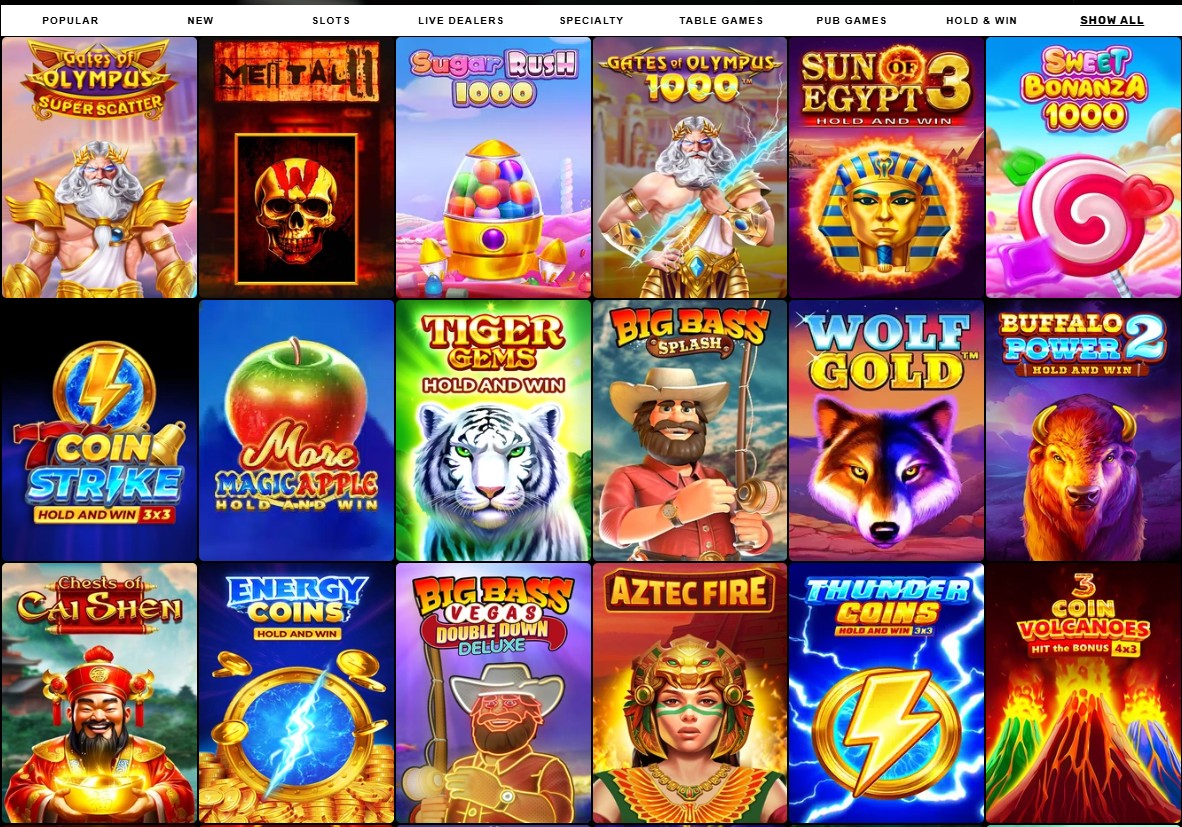
Three ways of deciding whether symbols count as a win, and the difference is structural rather than cosmetic.
Paylines are the traditional form: fixed patterns across the reels, and a win only counts if symbols land on one. Ways to win discards the patterns — matching symbols on adjacent reels count wherever they sit, which is why these games advertise hundreds or thousands of ways. Cluster pays abandons reels altogether: symbols touching each other in a group anywhere on the grid pay out.
None is inherently better. Ways-to-win games tend to produce more frequent small wins and are priced accordingly, which is exactly the trade the paytable already reflects.
Hold and spin, the Australian standard feature
If one mechanic defines the modern pokie it is this one. Certain symbols lock in place, the rest respin a fixed number of times, and every new lock resets the counter. The round ends when a respin adds nothing.
Its appeal is that it converts a single outcome into a sequence with visible progress — you can see how close the grid is to filling. Its design is why it suits the format: the feature has a natural climax and a definite end, which a free-spins round does not.
It carried online almost unchanged from club floors, which is why Australian players recognise it instantly and why nearly every studio building for this market now includes a version.
Cascades, tumbles and chain reactions
Winning symbols are removed, the ones above fall into the gaps, and new symbols drop in — potentially producing another win from the same spin.
Frequently paired with a multiplier that rises through the sequence, which is where the mechanic gets its reputation. The important detail: a cascade is still one spin's outcome. The sequence is how that outcome is delivered, not additional chances added to it, and the paytable is priced with the cascades included.
Megaways and variable reels
Each reel shows a different number of symbols on each spin, so the number of ways to win changes spin to spin — which is where the very large advertised figures come from.
What it does in practice is raise volatility. More possible combinations means the distribution spreads: more spins returning nothing, and a longer tail of larger outcomes. A player expecting the frequent small returns of a low-volatility game will find these tiring on a small balance.
The headline number is not a measure of generosity. It is a description of the geometry.
Feature buys, and why the maths does not change
Many modern titles let you pay a fixed multiple of the stake to enter the bonus round immediately rather than waiting for it to trigger.
The price is set so the expected return on a purchased feature is broadly the same as reaching it naturally. It is a convenience purchase — it compresses time, not odds. What it does change is the speed at which a balance is consumed: a buy priced at many times the base stake spends a budget far faster than ordinary spins do.
The other thing worth knowing: while a bonus wagering requirement is active, a feature buy will often exceed the maximum bet permitted, and breaching that cap can void the balance. Feature buys and active bonuses are a bad combination for that reason alone.
Slot volatility, and matching it to a balance
Volatility is the single most useful thing to know about a title before playing it, and it is usually stated in the game's own info panel.
| Volatility | Behaviour | Suits |
|---|---|---|
| Low | Frequent small returns | Long sessions on a modest balance |
| Medium | Mixed | General play |
| High | Rare, larger outcomes | Larger balances, shorter sessions |
The practical rule: match volatility to the size of the budget rather than to the size of the hoped-for win. A high-volatility game on a small balance usually ends before its distribution has had any chance to do what it does — which is the most common mismatch on any casino floor, physical or otherwise.
Jackpots, and how they are funded
A progressive jackpot is funded by a slice of every stake placed on the games feeding it. That slice comes out of the return the base game would otherwise pay — which is why a progressive title's ordinary play often feels tighter than a comparable non-progressive one.
That is not a hidden cost so much as an unnoticed one. You are buying a lottery ticket alongside each spin, and the ticket is priced by reducing what the rest of the game returns.
Reading a pokies paytable before you spend anything
Every game carries its own info panel and almost nobody opens it. Four things are in there and all four are decided before you spin.
- Volatility, usually stated directly. The single most useful line.
- How the feature triggers — how many scatters, and whether they must land on specific reels.
- What the top symbols actually pay, which is frequently far less than the animation implies.
- Whether the advertised figure is a multiplier of the stake rather than a cash amount, which changes what it means entirely.
Reading it takes under a minute and is the closest thing to a free decision available.
The Pokies Net studios and their house styles
Design language repeats within a catalogue, so knowing which studio built a title tells you a lot about how it will behave before you open it.
| Studio | Known for | Type |
|---|---|---|
| Pragmatic Play | Gates of Olympus, Sweet Bonanza and the Big Bass series | Pokies |
| Hacksaw Gaming | High-volatility modern titles such as Wanted Dead or a Wild | Pokies |
| NetEnt | Long-running classics including Starburst and Gonzo's Quest | Pokies |
| Play'n GO | Book of Dead and a deep back catalogue of book-style pokies | Pokies |
| Big Time Gaming | Originated the Megaways reel mechanic used across the industry | Mechanic |
| Evolution | Live dealer studios — Lightning Roulette, Crazy Time, blackjack tables | Live |
| Nolimit City | Mechanically heavy titles like Mental and San Quentin | Pokies |
 Storm God
 Thunder Dragon
 Candy Frenzy
 Outlaw Duel
This is also why studio spread matters more than title count when judging a library. Two thousand games from three builders offers less genuine variety than four hundred from a dozen.
Trying a title before staking on it
Demo mode runs the same certified engine as real play. It is the correct place to learn a mechanic, see how often a feature actually triggers, and decide whether a game's pace suits you.
| Method | Type | How it settles |
|---|---|---|
| PayID | Bank transfer (NPP) | Near-instant between participating Australian banks; addressed by phone, email or ABN |
| Litecoin | Crypto | Faster block times than Bitcoin and lower fees for the same transfer |
| Osko | Bank transfer (NPP) | BPAY's NPP service — same real-time rails as PayID, usually under a minute |
| POLi | Bank redirect | Authorised inside your own online banking; deposits only, no card details shared |
| Neosurf | Prepaid voucher | Bought with cash and redeemed by code; deposit-only by design, so payouts route elsewhere |
| BPAY | Bill payment | Batched rather than real-time — typically one to two business days |
| Visa | Card | Deposits authorise instantly; refunds back to card run on the scheme's own timetable |
| Mastercard | Card | As Visa — instant in, slower out, and some issuers decline gambling MCCs |
| Bank transfer | Direct entry | The legacy non-NPP rail; one to three business days, no weekend processing |


The methods carried alongside the games library.
What demo cannot tell you is anything predictive. A good demo run and a bad one are both samples far too small to mean anything, and treating either as a signal is the most common mistake made with a feature that is otherwise entirely useful.
Free spins rounds, and what varies between them
Almost every title has one and they differ more than the shared name suggests.
| Variable | What it changes |
|---|---|
| Number of spins | Least important - the headline everyone compares |
| Whether multipliers persist | Substantial; a rising multiplier held across the round changes the tail |
| Whether the round can retrigger | Substantial; an open-ended round has a much longer tail |
| Modified reels during the round | Often the real feature - extra wilds or removed low symbols |
| How it triggers | Decides how often you will actually see it |
The first row is the number in the marketing and the least informative line in the table. The middle three are where two rounds of identical length diverge entirely.
Autoplay, turbo and what speed actually costs
Both settings do the same thing to a session: they increase the number of spins per hour without changing the outcome of any individual one.
The maths is unchanged and the cost is not. A game returning less than it takes over a long run returns less faster when it is played faster, so doubling the spin rate roughly doubles the hourly cost of the entertainment. That is the entire effect of turbo mode, and it is worth knowing before it is switched on rather than after.
Autoplay adds a second effect: it removes the small decision point that each manual spin provides. Those decision points are where sessions naturally end, and a setting that removes them removes the pauses along with them.
What the animation is not telling you
A slot is a presentation layer over a decided result, and the presentation is designed to be engaging in ways that are worth naming.
Near misses are not near. A symbol landing just above the payline was never going to land on it; the reel positions were fixed before the animation began, and the framing is a design choice. Anticipation effects — the slowed reel, the change in sound as two scatters land — are triggered by a result already determined, not by a live outcome still in play.
None of this is dishonest, and all of it is disclosed in the sense that the certified engine is what it is. But it is worth understanding that the tension a game creates is authored rather than emergent.
Bonus buy pricing, and how to read it
Where a feature buy is offered, its price is expressed as a multiple of the base stake — and that multiple is itself informative about the game.
A high buy price signals a feature that is rare and, when it lands, substantial. A low one signals a feature that triggers often and returns modestly. The number is effectively the game telling you its own volatility in the clearest terms it ever will, before you have spent anything finding out.
Read that way, the buy price is useful even to a player who never intends to use it.
Why two similar-looking games behave differently
Two titles can share a grid size, a theme and a feature list and produce entirely different sessions, which is a common source of confusion.
The reason is usually the distribution of the paytable rather than anything visible in the lobby. A game that concentrates its return in the base game feels steady; one that concentrates it in a rare feature feels dead until the feature lands. Both can advertise the same return to player, because that figure describes the total and says nothing about how it is spread.
Volatility is the published shorthand for exactly this, which is why it is the single most useful line in the info panel and why it is worth checking before the theme or the artwork.
Where the mechanics came from
Almost every mechanic on this page has a physical ancestor, and knowing the lineage makes them easier to recognise.
Hold-and-spin descends directly from club-floor machines where symbols locked and the rest respun. Ways-to-win replaced fixed paylines on Australian machines long before it appeared online. Cascades are a genuinely digital invention with no mechanical equivalent — a physical reel cannot remove symbols and drop new ones into the gap. Megaways is likewise native to software, because varying the number of symbols per reel each spin is not something a mechanical drum can do.
The pattern: the mechanics that feel familiar to Australian players are the inherited ones, and the ones that feel newest are the ones software made possible.